
A structural shift is underway in commercial aviation: airlines are increasingly building their business around premium passengers, as demand from budget-conscious travelers in the main cabin softens.
Premium overtakes economy
The milestone came at Delta Air Lines, where premium ticket revenue reached $6.92 billion in the second quarter of 2026, up 17% year on year — exceeding main cabin revenue of $6.85 billion for the first time in the carrier's history. United Airlines has followed a similar path, with premium seat revenue rising 11% over the past year.
A widening divide
The trend reflects a broader divergence in consumer spending. Higher-income travelers continue to pay for lie-flat seats, extra legroom and lounge access, while lower-income passengers — squeezed by inflation — are pulling back, leaving main-cabin revenue under pressure across the industry. Around 45% of the world's widebody aircraft now feature premium economy seating, a figure that reaches roughly 90% across North American widebody fleets.
What it means for travelers
For carriers, premium cabins carry margins well above standard economy, and fleets are being redesigned accordingly — more premium seats, fewer basic ones. For travelers, that points to a widening gap in the flying experience, and to fare structures increasingly built around those willing to pay for comfort.
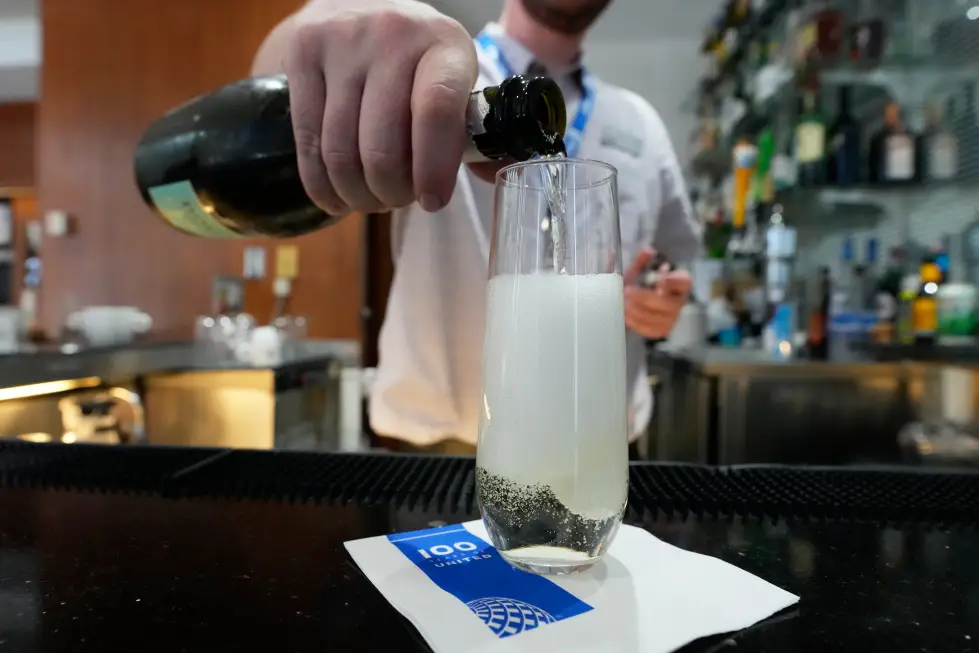
Image: A bartender pours a glass of sparkling wine at the United Club lounge, Monday, June 29, 2026, in Minneapolis, Minn. (AP Photo/Chris Carlson)

.png)
.png)

.png)
.webp)